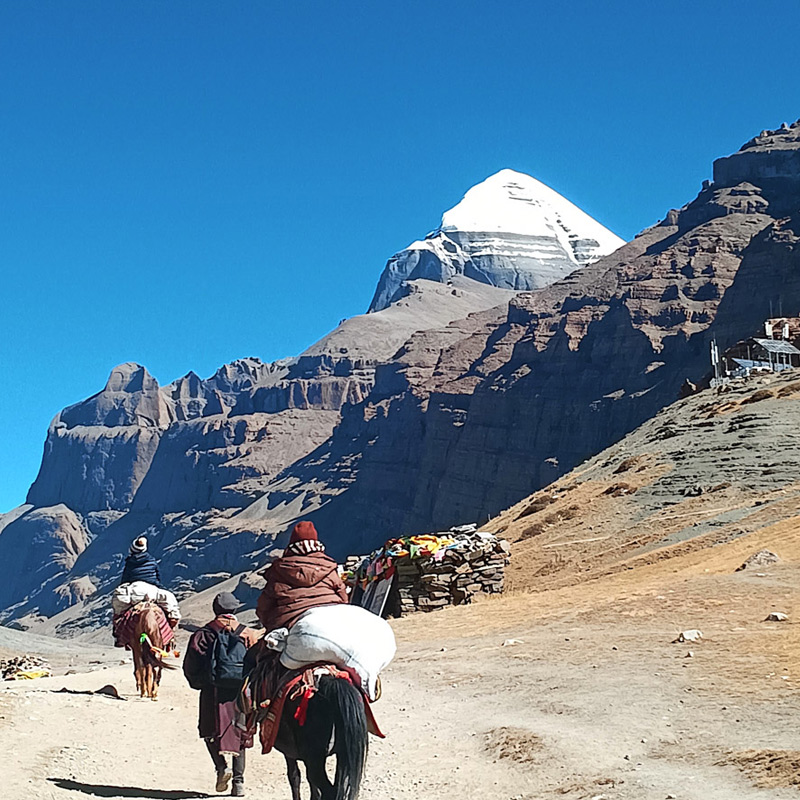
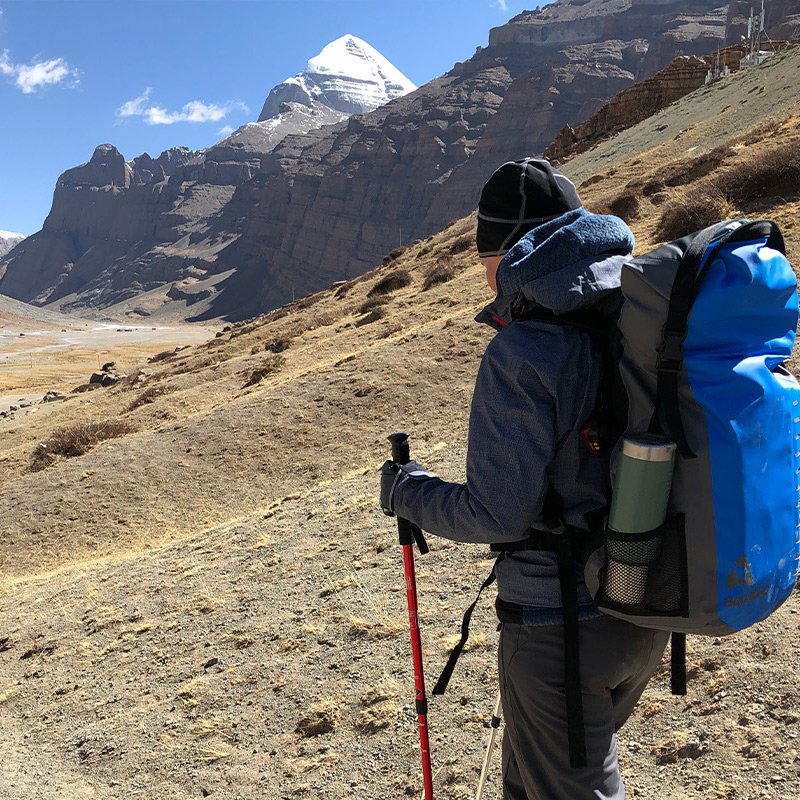
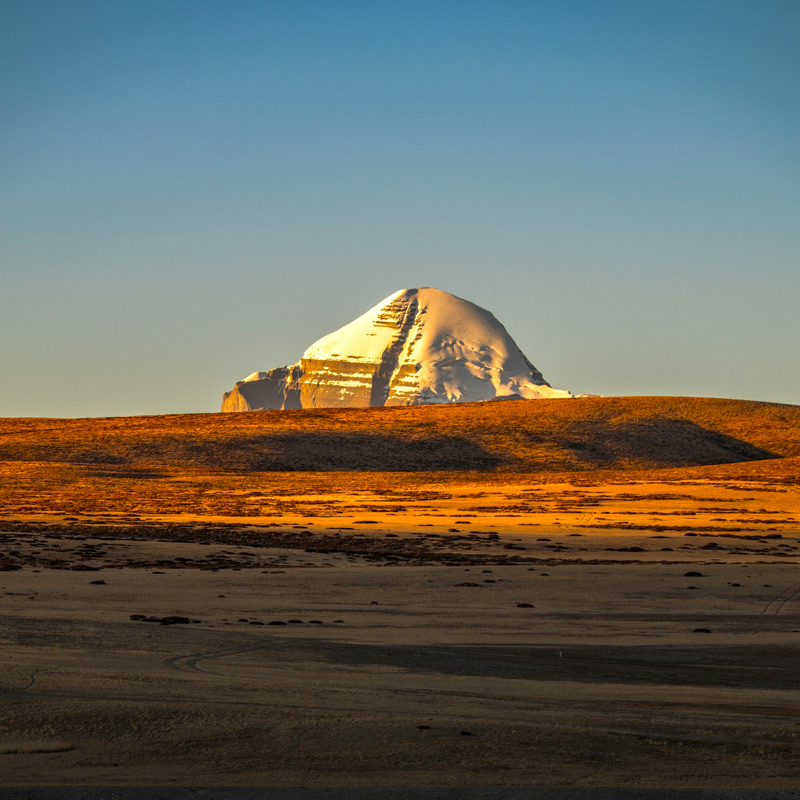
Choosing the right time to visit Mount Kailash can make a big difference to your journey. Weather affects road conditions, mountain views, trekking comfort, and even whether the three-day Mount Kailash Kora can be completed as planned.
Unlike many destinations in Tibet, Kailash Manasarovar is only accessible for a limited season. Most tours operate from late April or early May until early October. Outside this period, heavy snow, icy roads, and the closure of tourism services make travel extremely difficult.
So, when is the best time to visit Kailash Manasarovar?
For most travelers, June and September offer the best balance of pleasant weather, clear mountain views, and comfortable trekking conditions. However, every month has its own advantages. Some visitors come for pilgrimage, others for photography, while many simply want fewer crowds or warmer daytime temperatures.
This guide explains what to expect from April through October, including average temperatures, weather conditions, trekking advice, and who each month is best suited for. By the end, you’ll know which departure matches your travel plans.
Quick Answer: What Is the Best Time to Visit Kailash Manasarovar?
If you want the short answer, June and September are the two months we recommend most often.
June offers stable weather, comfortable temperatures, and some of the best trekking conditions of the year. It’s an excellent option for first-time visitors and anyone planning to complete the three-day Mount Kailash Kora.
September is famous for its crystal-clear skies after the summer season. Visibility is often at its best, making it the favorite month for photographers and travelers hoping to enjoy unobstructed views of Mount Kailash.
Other months are also worth considering depending on your priorities.
Quick Facts: Best Months to Visit Mount Kailash
Snowy scenery and quieter trails
Saga Dawa Festival and clear mountain views
Best overall weather and trekking conditions
Warmest weather and green landscapes
Peak Kailash Yatra season
Best mountain views and photography
Peaceful landscapes and fewer tourists
There isn’t a single “perfect” month for everyone. The best time depends on whether you value comfortable trekking, religious pilgrimage, photography, or quieter trails.
Why Mount Kailash Weather Changes So Quickly
One of the biggest surprises for many visitors is how quickly the weather changes around Mount Kailash.
You may leave Darchen under clear blue skies, yet encounter strong winds, snow flurries, or freezing temperatures just a few hours later while crossing Dolma La (5,630 m / 18,471 ft).
The main reason is altitude. During the kora, you’ll climb nearly 1,000 meters from Darchen to Dolma La. At this elevation, temperatures can drop rapidly, especially when clouds move in or the wind becomes stronger.
The high-altitude sun can also be misleading. Even when the air temperature is only 8–10°C (46–50°F), direct sunlight feels surprisingly warm. Once the sun disappears behind clouds, the temperature can fall sharply within minutes.
Instead of relying on one heavy jacket, dress in layers. Most experienced travelers adjust their clothing several times throughout the day as conditions change.
Another thing to remember is that cold nights are normal throughout the travel season. Even in July and August, temperatures around Mount Kailash and Lake Manasarovar often fall close to or below freezing after sunset.
Kailash Manasarovar Weather & Temperature Overview
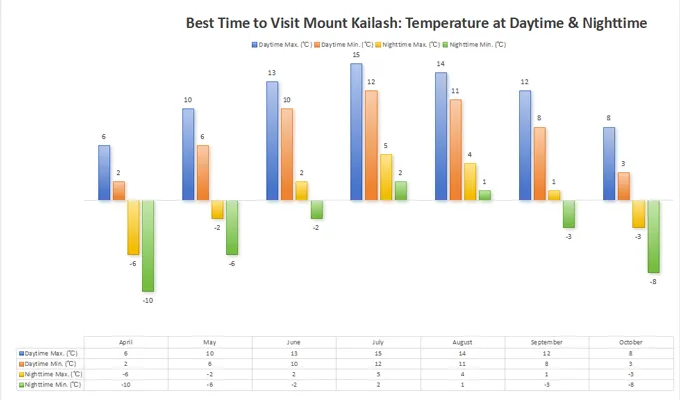
The table below provides a quick comparison of average temperatures and travel conditions during the Kailash Manasarovar travel season.
| Month | Daytime Temperature | Night Temperature | Weather | Recommended? |
|---|---|---|---|---|
| April | 2–6°C | -10 to -6°C | Cold, dry, windy | Good for experienced travelers |
| May | 6–10°C | -6 to -2°C | Sunny, clear skies | Excellent |
| June | 10–13°C | -2 to 2°C | Stable and comfortable | Excellent |
| July | 12–15°C | 2–5°C | Warmest month, occasional afternoon showers | Very Good |
| August | 11–14°C | 1–4°C | Mild, partly cloudy | Very Good |
| September | 8–12°C | -3 to 1°C | Clear, crisp, excellent visibility | Excellent |
| October | 3–8°C | -8 to -3°C | Cold, dry, possible snowfall | Fair |
These temperatures are based on the areas most travelers visit, including Darchen, Lake Manasarovar, and the Mount Kailash Kora. Temperatures at Dolma La are often several degrees lower, and light snowfall is possible in any month.
Kailash Manasarovar Weather in April
Kailash Weather in April at a Glance
2–6°C (36–43°F)
-10 to -6°C (14–21°F)
Experienced trekkers, photographers, and travelers looking for quieter trails
April marks the beginning of the Kailash Manasarovar travel season. The landscape still feels like winter, with snow-covered mountains, crisp air, and quiet roads. If you’re looking for peaceful scenery and don’t mind the cold, it’s one of the most rewarding months to visit.
The biggest advantage of April is the lack of crowds. You’ll often have viewpoints around Lake Manasarovar and sections of the Mount Kailash Kora almost to yourself, making it an excellent time for photography.
The trade-off is the weather. Mornings and evenings are freezing, strong winds are common, and snow can still affect higher sections of the trail, especially around Dolma La. If this is your first trip to high altitude, May or June will usually be more comfortable.
What to Pack for April Kailash Tour
- Heavy down jacket
- Thermal base layers
- Waterproof hiking boots
- Warm gloves
- Wool hat
- Sunglasses and SPF 50+ sunscreen
Kailash Manasarovar Weather in May
Kailash Weather in May at a Glance
6–10°C (43–50°F)
-6 to -2°C (21–28°F)
Saga Dawa Festival, first-time visitors, photography, and trekking
For many experienced guides, May is when the Kailash Manasarovar Yatra truly begins.
For many travelers, May is when the Kailash Manasarovar season truly comes alive. The weather becomes milder, roads are generally clear of winter snow, and trekking conditions improve significantly without the larger crowds of peak season.
One of the biggest highlights is the Saga Dawa Festival, the most important Buddhist festival in Tibet. Held on the 15th day of the fourth month of the Tibetan calendar (usually in May or early June), it commemorates the birth, enlightenment, and parinirvana of Buddha Shakyamuni.
During Saga Dawa, thousands of Tibetan pilgrims gather at Mount Kailash to complete the sacred kora. Prayer flags cover mountain passes, monasteries become especially lively, and the entire region takes on a unique spiritual atmosphere. If experiencing Tibetan Buddhist culture is part of your journey, this is one of the most meaningful times to visit.
Besides the festival, May is also known for its clear skies and excellent visibility. Snow still covers the surrounding peaks, creating beautiful contrasts against the deep blue sky, while temperatures remain comfortable for sightseeing and trekking.
Because Saga Dawa attracts pilgrims from across Tibet and neighboring regions, accommodation and tour availability can become limited. If you plan to travel during the festival period, booking several months in advance is strongly recommended.
Why Choose May to Visit Kailash?
- Experience the Saga Dawa Festival
- Clear mountain views and excellent photography
- Comfortable temperatures for the kora
- Fewer international tourists than July and August
- A great choice for first-time visitors
Kailash Manasarovar Weather in June
Kailash Weather in June At a Glance
10–13°C (50–55°F)
-2–2°C (28–36°F)
Best overall weather, comfortable trekking, and first-time visitors
If you’re unsure when to visit Mount Kailash, June is usually the safest recommendation.
By this time, most winter snow has disappeared from the roads to western Tibet, making the journey smoother and more reliable. Daytime temperatures are comfortable for hiking, while nights remain cold but are generally easier to manage than in April or May.
June also offers one of the best balances between weather and visitor numbers. The trails are livelier than in spring but rarely feel overcrowded, giving you enough space to enjoy both the scenery and the pilgrimage route.
For those planning the three-day Mount Kailash Kora, June is often considered the easiest month. The trail is usually dry, daylight hours are long, and the risk of weather-related disruptions is relatively low.
Although June is one of the most stable months, this is still a high-altitude environment. Conditions can change quickly, particularly near Dolma La, where temperatures may drop below freezing even on sunny afternoons. Dressing in layers remains the best approach.
Why Choose June to Visit Kailash?
- Best overall travel conditions
- Comfortable temperatures for trekking
- Stable weather and reliable road access
- Long daylight hours
- Ideal for first-time Kailash visitors
Kailash Manasarovar Weather in July
Kailash Weather in July At a Glance
12–15°C (54–59°F)
2–5°C (36–41°F)
Warm weather, green landscapes, and comfortable sightseeing
July is the warmest month of the Kailash Manasarovar travel season. Although it’s often associated with the South Asian monsoon, western Tibet receives far less rainfall than Nepal because the Himalayas block much of the moisture.
Most days are dry, with occasional afternoon showers or short periods of cloud rather than continuous rain. In most years, weather has little impact on completing the Mount Kailash Kora.
The warmer temperatures bring a noticeable change to the landscape. Grasslands become greener, wildflowers begin to bloom, and Lake Manasarovar often reflects dramatic cloud formations, making July one of the most colorful months of the year.
The only drawback is that cloud cover is more common than in May or September, so clear views of Mount Kailash are not always guaranteed.
Why Choose July to Visit Kailash?
- Warmest temperatures of the season
- Green grasslands and summer scenery
- Comfortable for sightseeing and trekking
- Suitable for families and older travelers
- Less rainfall than many travelers expect
Kailash Manasarovar Weather in August
Kailash Weather in August At a Glance
11–14°C (52–57°F)
1–4°C (34–39°F)
Peak Kailash Yatra season, first-time visitors, and cultural experiences
August is one of the busiest months for the Kailash Manasarovar Yatra. Tour departures are frequent, and travelers from around the world gather in western Tibet to complete the sacred kora.
Weather remains comfortable, with mild daytime temperatures and relatively stable road conditions. While afternoon clouds are fairly common, prolonged rain is still unusual on the Tibetan side of the Himalayas.
Because it’s the peak travel season, guesthouses, restaurants, and popular viewpoints are busier than in spring or early autumn. If you enjoy meeting fellow travelers and sharing the pilgrimage experience, August offers a lively atmosphere.
If you prefer quieter trails and uncrowded viewpoints, May or September may be a better choice.
Why Choose August to Visit Kailash?
- Peak Kailash Manasarovar Yatra season
- Comfortable weather for the kora
- Frequent scheduled tour departures
- Lively international pilgrimage atmosphere
- Good choice for first-time visitors
Kailash Manasarovar Weather in September
Kailash Weather in September At a Glance
8–12°C (46–54°F)
-3–1°C (27–34°F)
Photography, trekking, and the clearest mountain views
For many experienced Tibet guides, September is the most beautiful month to visit Mount Kailash.
After the summer season, the air becomes noticeably drier, improving visibility across the plateau. On clear days, it’s much easier to enjoy uninterrupted views of Mount Kailash, making September a favorite among photographers.
Although temperatures begin to cool, daytime conditions remain comfortable for trekking. The combination of crisp air, golden grasslands, snow-dusted peaks, and fewer visitors creates some of the most spectacular scenery of the year.
If capturing the perfect photo of Mount Kailash is high on your list, September is hard to beat.
Why Choose September to Visit Kailash?
- Clearest views of Mount Kailash
- Excellent conditions for photography
- Comfortable trekking temperatures
- Fewer crowds than August
- One of the best months for the kora
Kailash Manasarovar Weather in October
Kailash Weather in October At a Glance
3–8°C (37–46°F)
-8 to -3°C (18–27°F)
Experienced travelers, photographers, those looking to avoid crowds
October marks the end of the Kailash Manasarovar travel season. During the first half of the month, many tours still complete the Mount Kailash Kora, provided weather conditions remain favorable.
The biggest advantage is the peaceful atmosphere. Visitor numbers drop significantly after the summer peak, allowing you to enjoy quieter trails and less crowded guesthouses.
The trade-off is colder weather. Frost becomes common around Lake Manasarovar, and fresh snowfall can arrive at any time, particularly around Dolma La. As the month progresses, road conditions become less predictable, and many seasonal tourism services begin to close.
If you’re planning an October trip, early October is usually a much better choice than late October.
Why Choose October to Visit Kailash?
- Quietest month of the travel season
- Beautiful autumn light for photography
- Less crowded trekking routes
- Suitable for travelers comfortable with colder weather
Keep in Mind
October may not be the best option if:
- This is your first high-altitude trek.
- You are sensitive to cold weather.
- You prefer the warmest trekking conditions.
Can You Trust the Mount Kailash Weather Forecast?
Many travelers check the forecast before their trip, searching for terms like “Mount Kailash weather today”, “Kailash Manasarovar weather”, or “10-day Mount Kailash forecast.” While these forecasts are useful for planning, they shouldn’t be treated as exact predictions.
The main reason is simple: there isn’t an official weather station on Mount Kailash itself. Most weather apps use data from nearby towns such as Darchen or Purang (Burang). These forecasts provide a general picture, but conditions on the kora can be very different.
Altitude also plays a major role. During the trek, you’ll climb from 4,575 m (15,010 ft) in Darchen to 5,630 m (18,471 ft) at Dolma La. At this elevation, sunshine can quickly turn into strong winds, light snow, or hail within a few hours.
Our Advice
- Check the forecast before leaving for Tibet.
- Check it again before arriving in Darchen.
- Once you’re on the kora, follow your guide’s advice rather than relying only on a weather app.
Travel Tip from CHIBET Travel
Don’t worry if the forecast shows light snow. Snow is common at high altitude and often passes quickly. What’s more important is whether roads are open and whether Dolma La is safe to cross.
How Cold Is Mount Kailash?
Even during the travel season, Mount Kailash is much colder than many travelers expect. The combination of high altitude, strong winds, and intense UV exposure often makes it feel colder than the thermometer suggests.
Here’s what you can typically expect:
| Location | Daytime | Night |
|---|---|---|
| Darchen | 8–15°C | -3 to 2°C |
| Lake Manasarovar | 8–14°C | -4 to 1°C |
| Dolma La | Below 5°C | Often below freezing |
After sunset, temperatures drop quickly. Even in July and August, you’ll usually need a fleece or down jacket outdoors.
What Should You Pack for Kailash Manasarovar?
Packing for Mount Kailash isn’t about preparing for extreme winter—it’s about being ready for rapid weather changes.
The best strategy is to dress in layers, so you can easily adjust to changing temperatures throughout the day.
Essential Clothing
- Waterproof hiking boots
- Lightweight down jacket
- Fleece or insulated mid-layer
- Thermal base layers
- Waterproof shell jacket
- Hiking trousers
- Warm gloves
- Wool hat or beanie
- Sun hat
- UV-protection sunglasses
Other Essentials
- SPF 50+ sunscreen
- Lip balm
- Moisturizer
- Reusable water bottle
- Trekking poles
- Personal medications
- Power bank
Keep a waterproof jacket and one extra warm layer in your daypack, even if the morning starts with clear blue skies.
Best Time to Visit Kailash Manasarovar by Travel Style
The “best” month depends on what you hope to experience.
| If Your Priority Is… | Best Time |
|---|---|
| First visit to Tibet | June |
| Best overall weather | June & September |
| Clearest mountain views | May & September |
| Saga Dawa Festival | May (or early June, depending on the Tibetan calendar) |
| Photography | September |
| Warmest temperatures | July |
| Peak Kailash Yatra season | August |
| Fewer crowds | April, May & October |
If you’re still undecided, June is the easiest recommendation for most travelers. It offers a reliable balance of weather, road conditions, and trekking comfort.
Is Winter a Good Time to Visit Mount Kailash?
Generally, no.
From late October until the following spring, heavy snowfall, icy roads, and the seasonal closure of tourism services make travel to western Tibet difficult. International tours are normally suspended during this period.
If your schedule is flexible, plan your trip between May and September, when roads, accommodation, and support services operate normally.
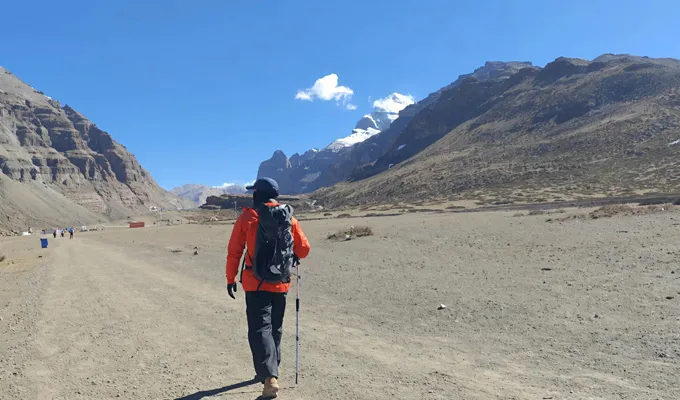
Conclusion
There’s no single “best” month to visit Mount Kailash—only the month that best matches your travel goals.
If you want the most comfortable trekking conditions, June is usually the safest choice. If crystal-clear mountain views and photography are your priorities, September is hard to beat. Travelers hoping to experience the spiritual atmosphere of the Saga Dawa Festival should consider May, while July and August offer warmer weather and the busiest Kailash Yatra season.
Whichever month you choose, prepare for high altitude, pack for changing weather, and allow enough time to acclimatize. Good preparation will have a much greater impact on your trip than trying to find the “perfect” forecast.
At CHIBET Travel, we monitor seasonal road conditions, permit schedules, and local weather throughout the travel season. If you’re unsure which departure is right for you, we’re happy to help you choose the best option based on your travel plans.
Frequently Asked Questions
FAQs on Mount Kailash Weather and Temperature
What is the best time to visit Kailash Manasarovar?
For most travelers, June and September offer the best combination of stable weather, comfortable temperatures, and clear mountain views. If you’re visiting for the first time, these two months are usually the safest choice.
When is the Saga Dawa Festival?
The Saga Dawa Festival is held on the 15th day of the fourth month of the Tibetan calendar, usually falling in May or early June. It’s the most important Buddhist festival associated with Mount Kailash and attracts thousands of pilgrims each year.
How cold does Mount Kailash get in summer?
During the travel season, daytime temperatures are generally between 8°C and 15°C (46–59°F). Nights often fall below freezing, especially near Dolma La.
Is July the rainy season at Mount Kailash? Does it rain a lot during the Kailash Kora?
Not in the way many travelers expect. Although July coincides with the South Asian monsoon, western Tibet receives much less rainfall than Nepal because the Himalayas block most of the moisture.
Can it snow during the Kailash Yatra?
Yes. Snow is possible in any month, especially around Dolma La, although light snowfall rarely causes major disruption.
Is October too late to visit Mount Kailash?
Not necessarily.
If you travel in early October, have appropriate cold-weather clothing, and are comfortable with lower temperatures, you can still enjoy an unforgettable pilgrimage.
If you’re traveling with older family members, children, or anyone who has little experience at high altitude, June through September is generally a more comfortable choice.
As a general rule, early October is still possible, while late October becomes much less predictable. Most tour operators schedule their final departures before winter conditions begin to affect roads and trekking routes.
Is there a real-time weather station at Mount Kailash?
No. Most weather forecasts are based on nearby towns such as Darchen or Purang. Conditions on the mountain itself may differ significantly.
Should I trust a 10-day weather forecast?
Use it as a general reference rather than a guarantee. Mountain weather changes quickly, especially above 5,000 meters, so forecasts become less reliable several days in advance.
Is the “Mount Kailash time dilation” story true?
Stories about Mount Kailash time dilation or Mount Kailash time travel are popular on social media and in documentaries, but there is no scientific evidence that time passes differently at Mount Kailash. These stories are best understood as local legends and internet myths rather than verified facts.
Is Mount Kailash open all year?
No. The travel season normally runs from late April or early May until early October. Most international tours do not operate during winter.
How far in advance should I book a Kailash Manasarovar tour?
Book 3–6 months in advance, especially if you plan to travel during Saga Dawa, July, or August, when demand is highest. Early booking also gives enough time to arrange the necessary Tibet travel permits.