A Tibet Tour from Chongqing can be a short cultural trip, a journey to Everest, a much longer expedition toward Mount Kailash, or part of a bigger China–Tibet–Nepal itinerary.
That is why I would not start by choosing a train or a flight.
Start with the Tibet you want to experience.
Chongqing is simply where the journey begins.
From there, you can reach Lhasa by air in a few hours or take the long direct train and let the landscape change gradually as you travel west. Once you know what you want to do in Tibet and how many days you have, choosing between those two options becomes much easier.
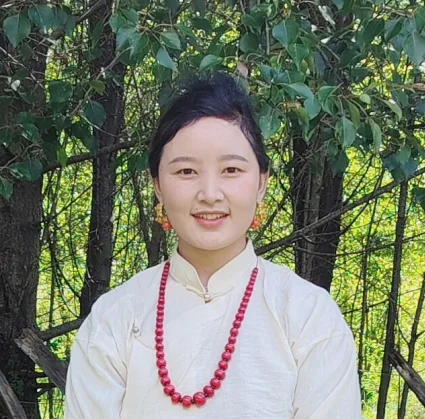
I’m Tsering Pema, and my approach at CHIBET Travel is fairly simple: help travelers understand the choices before they commit to a route. A good Tibet tour should work in real life, not just look impressive on an itinerary.
What Kind of Tibet Tour Do You Want?
This is the decision that will shape everything else.
If this is your first visit to Tibet and you mainly want to understand Tibetan culture, history and everyday life, you do not need to rush toward the far western regions.
Lhasa can easily be the center of the trip.
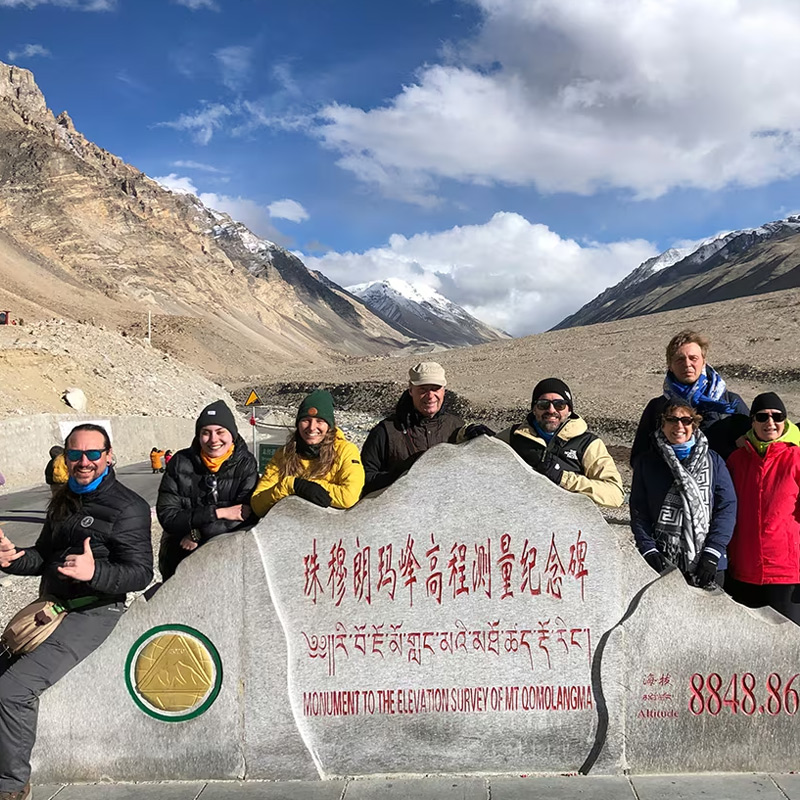
If Everest is the place you have dreamed about for years, the itinerary needs to give more space to the road journey and altitude.
If your real goal is Mount Kailash, then Lhasa is only the beginning. The western part of the trip needs to be planned carefully because of the distance, elevation and physical demands.
And if you are already thinking about Nepal, the trip should be designed with the eventual border crossing or onward journey in mind.
These are not small variations of the same tour.
They are different journeys.
| Tibet tour style | Comfortable planning range | Main experience |
|---|---|---|
| Lhasa-focused tour | 7–9 days | Tibetan culture, monasteries and city life |
| Lhasa + Everest | 9–12 days | Lhasa, Shigatse and Everest Base Camp |
| Everest + western Tibet | 14–20+ days | High-altitude landscapes and western Tibet |
| Tibet + Nepal | 10–16+ days | Tibet highlights followed by Nepal |
The ranges are only a starting point. Your travel season, route, group size and interests can change the final itinerary.
Why Start a Tibet Tour in Chongqing?
Chongqing is an unusual place to begin a Tibet journey, but that is part of its appeal.
The city feels dense, warm and energetic. It is built across hills, with roads climbing between buildings and bridges crossing the rivers below. Food is a big part of the experience too, especially if you enjoy spicy dishes.
Lhasa feels almost like another world.
The air is dry. The sunlight is strong. The city sits at roughly 3,650 meters, and the surrounding landscape quickly opens into a much wider plateau.
If you take the train, you get to watch that change happen.
That is something a flight cannot give you.
If you have time before leaving Chongqing, one or two nights can be worthwhile. Not because you need to fill your itinerary with sightseeing, but because it gives you some breathing room before the long journey west.
If Chongqing is only a connection point in your China itinerary, that is fine too.
There is no need to force a city tour into the schedule.
Four Good Ways to Build the Journey
There is no single “Chongqing Tibet tour.”
Here are four routes that make practical sense for different travelers.
1. Chongqing → Lhasa
This is the simplest version.
Spend several days in Lhasa and, if time allows, add a nearby excursion such as Yamdrok Lake.
This works well for travelers who are more interested in Tibetan culture than long road journeys.
You have time to see the Potala Palace, visit Jokhang Temple, walk around the Barkhor area and visit monasteries without spending half the holiday inside a vehicle.
For a first trip, there is nothing wrong with keeping the route small.
2. Chongqing → Lhasa → Everest
Everest gives the trip a very different rhythm.
After spending time in Lhasa, you can travel toward Shigatse and then continue west toward the Everest region.
The road is part of the experience. So are the changing landscapes and increasingly high elevations.
This route deserves enough time for acclimatization before you reach the higher sections.
I would be suspicious of any itinerary that tries to make Everest feel like a quick side trip from Lhasa.
It is not.
3. Chongqing → Lhasa → Everest → Western Tibet
This is for travelers who want more than the usual first-time Tibet route.
Once you continue beyond the Everest region, the distances become much greater. A journey toward Mount Kailash and Lake Manasarovar requires considerably more time than a Lhasa sightseeing trip.
The three-day kora around Mount Kailash is also physically demanding. The route crosses Dolma La at about 5,630 meters, so the itinerary should be built around proper acclimatization rather than simply adding more sightseeing stops.
For this kind of trip, I would rather have one less attraction and a better-rested traveler.
4. Chongqing → Tibet → Nepal
This makes sense for people who are already planning a wider Asia journey.
Perhaps you are visiting Beijing, Xi’an or Chengdu first, then coming through Chongqing before heading into Tibet and eventually Nepal.
In that situation, Tibet should not be planned as an isolated section.
The end of the Tibet tour matters too.
Where will you finish?
How much time do you have before your next international flight?
Do you want to return to Chinese Mainland, or continue toward Kathmandu?
Those questions can change the most sensible route.
How Long Should a Chongqing Tibet Tour Take?
There is a temptation with Tibet to count destinations rather than days.
I would do the opposite.
Look at the number of days you actually have, then see what fits.
Around 7–8 days
Keep it focused.
A Lhasa-based itinerary is much more realistic than trying to add Everest, Namtso and several distant destinations.
If you are flying from Chongqing, you also save valuable travel time.
Around 9–12 days
Now you have room for a more substantial journey.
Lhasa plus Shigatse and Everest can work, depending on the exact route and season.
You can also choose to spend more time in Lhasa instead of adding another distant destination.
Around two weeks or longer
This gives you much more freedom.
The direct Chongqing–Lhasa train becomes easier to fit into the trip, and longer routes toward Everest or western Tibet become more realistic.
For Mount Kailash, allow considerably more time.
The further west you travel, the less useful it becomes to think in terms of “how many attractions can we see today?”
The journey itself takes time.
The Train Changes the Beginning of the Trip
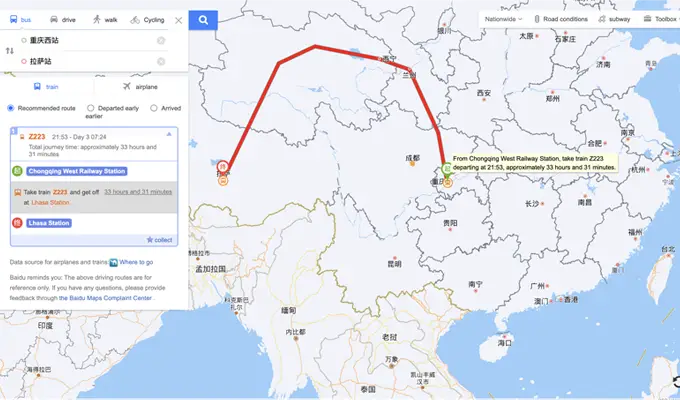
The direct Chongqing–Lhasa train is one of the most distinctive ways to begin this journey.
The current direct service is Z223 from Chongqing West to Lhasa, with a journey of roughly 33–34 hours depending on the current timetable at China Railway 12306.
That is a long time.
It is also the reason some travelers love it.
You leave Chongqing in the evening. The next day takes you through the interior of China before the landscape gradually becomes more open as the train continues westward.
By the time you reach the Qinghai–Tibet Railway section, the journey feels very different from where it started.
You have time to watch the landscape rather than simply arrive at the destination.
But I would not tell everyone to take the train.
If you have eight days in total, spending around a day and a half reaching Lhasa may not be the best use of your holiday.
If you have two weeks and enjoy trains, it can be one of the memorable parts of the trip.
That is the real calculation.
Flying Makes More Sense for a Short Tour
The alternative is simple: fly from Chongqing to Lhasa.
The flight takes only a few hours, which gives you much more time in Tibet.
For a short holiday, I usually see the advantage immediately.
You can leave Chongqing in the morning and be dealing with the much more important question of how your body feels at Lhasa altitude later that day.
That last part matters.
Lhasa is high.
Coming from Chongqing, the change in altitude is substantial, particularly if you fly there directly.
I would not plan a packed sightseeing schedule for the first afternoon.
Check into the hotel.
Eat something light.
Rest.
If you feel comfortable, take a gentle walk.
Then start the more demanding sightseeing after you have had time to adjust.
The Potala Palace will not disappear overnight.
Build the Itinerary Around Altitude, Not Just Distance
This is one of the easiest things to overlook when planning Tibet from a Chinese Mainland city.
A map makes some routes look straightforward.
The reality can be quite different.
Two destinations may not seem far apart, but the drive can take several hours. At the same time, you may be moving from one elevation to another.
When I look at a Tibet tour, I want to know more than the number of kilometers.
I look at:
- where you sleep each night
- the altitude at each stop
- how long you spend on the road
- whether the next day is higher
- how many long driving days come together
- whether there is enough time to actually enjoy the destination
This becomes especially important for Everest and western Tibet.
A beautiful itinerary on paper can become exhausting when every day starts early and ends late.
Give Lhasa Some Time
Lhasa is sometimes treated as a gateway rather than a destination.
I think that is a mistake.
For many travelers, the first few days in Lhasa are where the trip starts to make sense.
The Potala Palace is the obvious landmark, but it is only one part of the city.
Jokhang Temple and the surrounding Barkhor area give you a very different experience. Monasteries offer another side of Tibetan life. Even an ordinary walk through the old streets can be more memorable than another hour spent inside a vehicle.
And there is a practical reason to stay.
You need time to adjust.
You do not have to spend the first day doing nothing, but you should leave some flexibility.
If your body tells you to slow down, listen to it.
A Tibet tour is not improved by becoming exhausted on day two.
What Changes When Everest Is Added?
Once Everest becomes part of the itinerary, road time becomes a major part of the tour.
You leave Lhasa and gradually move west, normally passing through the Shigatse area before continuing toward the Everest region.
The scenery becomes increasingly open.
You may find yourself stopping for views that were not even marked on your original itinerary.
That is one of the nice things about this route.
But the long drives are real.
So are the higher elevations.
That is why I would not compare a Lhasa–Everest tour with a Lhasa city tour simply by counting the number of days.
They are different travel experiences.
The Everest route asks more from you physically and gives you more in return if you enjoy big landscapes and long road journeys.
And What If Kailash Is the Real Goal?
Then plan for Kailash from the beginning.
Do not add it at the end of a normal Tibet itinerary as if it were another sightseeing stop.
The route toward Mount Kailash and Lake Manasarovar takes you deep into western Tibet. The elevation is high, the roads are long and the physical demands become much greater.
The kora itself is the central part of the experience for many pilgrims and travelers.
A three-day trek around Mount Kailash includes the crossing of Dolma La, around 5,630 meters above sea level.
That is not an itinerary where “we can just walk a little slower” solves every problem.
You need sensible acclimatization, enough rest and a route that does not leave you exhausted before the trek even begins.
If Kailash is your reason for coming to Tibet, let it determine the pace of the entire trip.
What Foreign Travelers Need to Arrange
There is another important difference between traveling to Chongqing and traveling into Tibet.
Foreign travelers need the applicable Tibet travel documentation and organized travel arrangements before entering the Tibet Autonomous Region.
The Tibet Travel Permit is the main entry document. Additional permits or authorizations may be required depending on where you want to travel, particularly for areas such as Kailash and western Tibet.
Your Chinese entry requirements also need to be checked according to your nationality and current regulations.
This is one reason I recommend settling the Tibet route before buying every transport ticket.
At CHIBET Travel, we can help explain the route, compare options and coordinate your enquiry. Once you proceed with a tour, the formal travel contract, payment, permit application and on-the-ground operation are handled by our licensed Tibet operating partner.
That division is deliberate.
Our job is to make the planning easier and clearer, rather than present ourselves as the company physically operating every part of your trip.
Where Is It Worth Spending More?
A more expensive Tibet tour is not automatically a better one.
If you are traveling on a budget, there are places where saving money makes sense.
There are also places where I would be careful.
For a long train journey from Chongqing, a sleeper is much more comfortable than a hard seat.
For a long western Tibet road trip, vehicle comfort matters more than it does for a short transfer around Lhasa.
For the first nights in Lhasa, a comfortable hotel can be worthwhile because good sleep becomes more valuable at altitude.
If you are flexible with dates and happy to follow a fixed itinerary, a small-group tour can offer good value.
If your route is unusual or you have specific priorities, a private trip gives you more room to adjust the pace.
I would spend money where it makes the journey easier.
I would not spend it simply to make the itinerary look more luxurious.
A Few Things to Sort Out Before Leaving Chongqing
You do not need a huge packing list.
But there are a few practical details worth taking seriously.
Keep important items with you
On the train, keep your passport, medicine, charger, travel documents and other essentials in a small day bag.
Do not put everything in your large suitcase.
Dress in layers
Chongqing and Lhasa can feel completely different.
A layered system works better than one heavy coat because temperatures can change considerably between daytime and evening.
Protect yourself from the sun
Tibet’s high-altitude sunlight can be strong even when the temperature feels cool.
Sunglasses, sunscreen and lip balm are useful.
Do not make your first day too ambitious
This is probably the simplest piece of advice in the whole article.
Arriving in Tibet is already a major change.
Give yourself time.
The Planning Order I Recommend
You do not need to build your trip from a spreadsheet.
Start with four questions:
- What is the one place I most want to see?
- How many days can I really spend in Tibet?
- Do I want the journey from Chongqing to be part of the experience?
- Where do I want the trip to finish?
The answers usually make the rest much clearer.
If Everest is your priority, the route will naturally grow around Everest.
If culture is the priority, Lhasa deserves more time.
If the railway journey excites you, the train may be worth the extra day.
If Nepal is next, the final section needs to be considered from the beginning.
There is no need to copy somebody else’s itinerary simply because it is popular.
A Tibet Tour Should Leave Some Room for Tibet
This is something I think is easy to forget when planning from a distance.
It is tempting to fill every day.
One monastery in the morning. Another attraction after lunch. A long drive before dinner. Early departure the next day.
Eventually the itinerary starts to look impressive.
The trip may not feel that way.
Leave some space.
Maybe you spend longer than expected around Barkhor Street.
Maybe the weather changes your plans.
Maybe you simply want to sit somewhere quiet after breakfast and do nothing for an hour.
Those moments are not wasted time.
They are part of traveling.
Tibet is a place where the pace of the journey matters almost as much as the destinations themselves.
Frequently Asked Questions
Tibet Tour from Chongqing FAQ
What is the best way to start a Tibet Tour from Chongqing?
It depends on your time and interests. Flying is usually more practical for a short Tibet holiday, while the direct train is appealing if you have enough days and enjoy long-distance railway travel.
How many days do I need for a Tibet Tour from Chongqing?
A focused Lhasa tour can work in around 7–8 days. About 9–12 days gives you more room for Everest or other destinations, while longer western Tibet journeys need considerably more time.
Is there a direct train from Chongqing to Lhasa?
Yes. A direct train service connects Chongqing with Lhasa. The journey takes roughly 33–34 hours, so it is best suited to travelers who have enough time and want the railway journey to be part of the experience.
Should I fly or take the train from Chongqing?
If your Tibet holiday is short, flying saves a significant amount of time. If you have around two weeks or more and enjoy train travel, the direct railway journey can be a worthwhile part of the trip.
Can I visit Everest Base Camp on a Chongqing Tibet tour?
Yes. You should allow enough time in Lhasa for acclimatization before continuing toward Shigatse and Everest. The route involves long drives and higher elevations.
Can I travel from Chongqing to Tibet and then continue to Nepal?
Yes. Tibet and Nepal can be combined in one itinerary. Tell your travel planner about Nepal from the beginning so the Tibet route can be designed around your final destination.
Can I include Mount Kailash?
Yes, but Kailash should be treated as the main focus of a longer western Tibet journey rather than a quick addition to a short Tibet tour.
Do foreign travelers need a Tibet Travel Permit?
Yes. Foreign travelers need the applicable Tibet travel authorization before entering Tibet. Additional permits may be required depending on the destinations in your itinerary.
Does CHIBET Travel operate the tour directly?
CHIBET Travel focuses on travel planning, route comparison, practical advice and coordinating traveler enquiries. Formal tour operation, contracts, payments, permit applications and on-the-ground services are handled by our licensed Tibet operating partner.
Plan the Journey That Fits You
A Tibet tour from Chongqing can begin in several different ways.
You can board a plane and reach Lhasa in a few hours.
You can take the long train west and watch the landscape change.
You can make Lhasa the heart of the trip, continue toward Everest, travel much farther toward Kailash, or eventually cross into Nepal.
There is no need to decide which version is “the best.”
The useful question is simpler:
Which one fits the Tibet experience you actually want?
If you have your approximate travel dates, number of travelers and the places you most want to see, CHIBET Travel can help you compare the options and work out a realistic route before you commit to the details.
Tibet is a long way from Chongqing.
That is exactly why the planning is worth getting right.